Search This Blog

Showing posts with label cell phone. Show all posts

Monday, May 21, 2012

Motorola Xoom Review: The latest tablet computer to hit the market, is fast and well built, but a little bit of a bugger to play with and way too overpriced

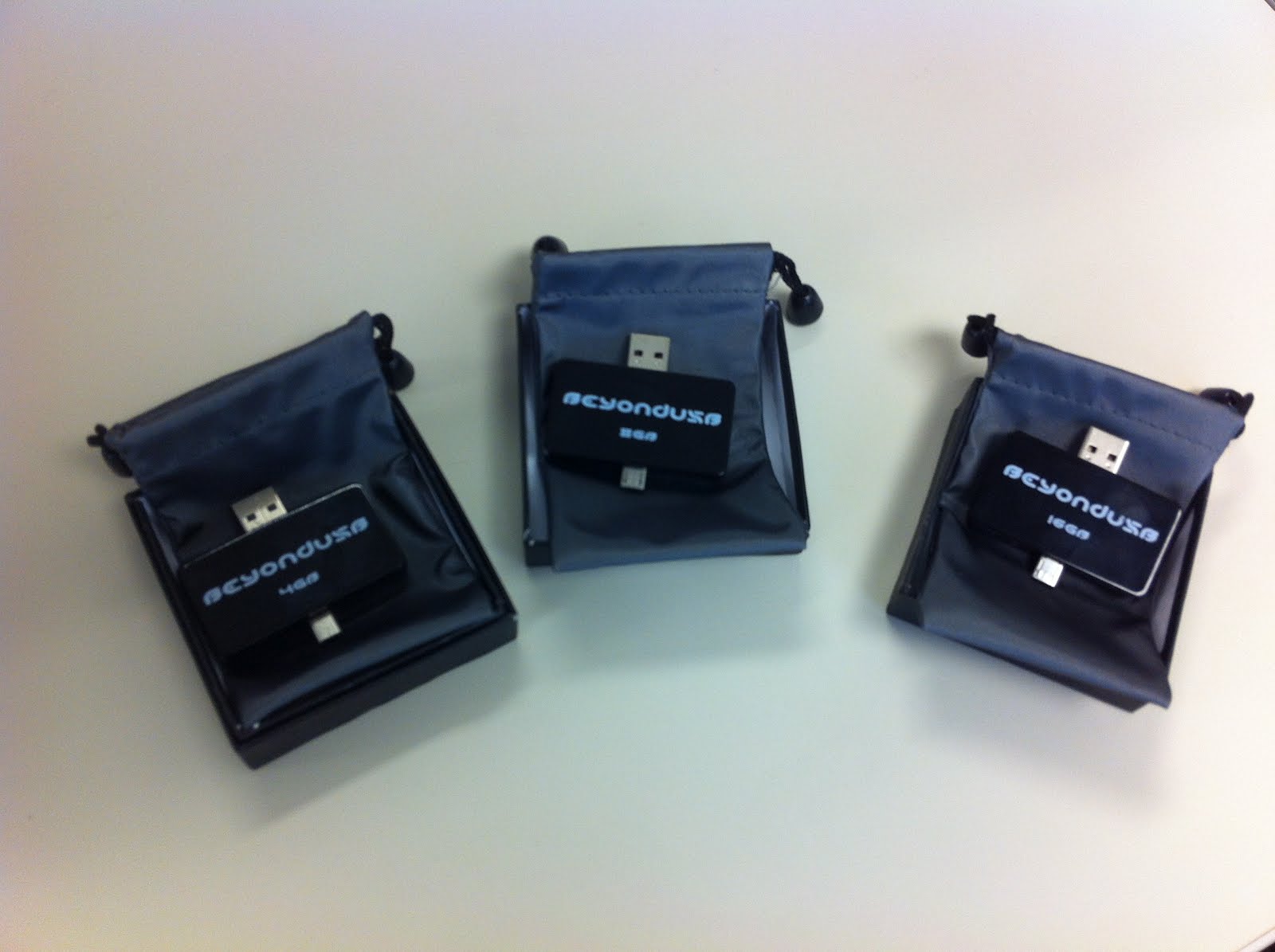
 Transfer Your Photos, Videos, Music, Documents and more in a flash, by simply plugging in your Beyond USB into your Smartphone or Computer. Very simple and easy for all to use. Get Yours Today! Visit http://www.BeyondUSB.com for more details!


Motorola Xoom review

Love

  • Blazing fast
  • PC-like functionality
  • Sturdy build, good battery

Hate

  • Software needs improvement
  • Just a handful of tablet apps
  • Poor media performance
Update: We now have a Motorola Xoom  2 and Apple iPad 2 video which you can watch (above). 
Since it was first announced at CES, we’ve been eagerly waiting for the Motorola Xoom – the first tablet with Google’s brand new Android 3.0 (Honeycomb) operating system. This is truly the first real competitor to the Apple iPad, and Xoom actually manages to outperform Apple’s tablet in quite a few areas. It has just launched in the US, where T3’s US correspondent Jeppe Christensen has been checking it out.

Motorola Xoom: Screen
The hardware is sturdy and impressive. The Xoom weighs in at 730 grams and is 12.9 millimeters thick –almost identical to the iPad, but the roomy 10.1-inch screen is wider, with 1280 x 800 pixel resolution. That gives the Xoom an edge when watching movies and browsing larger websites, but it also makes it feel a tad long and narrow while one is holding it vertically. No doubt, this beast was made for landscape mode, where the Honeycomb software is able to make great use of all that screen real estate.
Sunny weather is a problem though, the screen looks great when inside but there’s just too much glare to use the XOOM comfortably outside in direct sunlight. Turning the screen brightness all the way up helps but it’s nowhere near good enough.
The Xoom has better specs all-around than the current iPad. The processor is faster with two cores, there are four times as much memory, better speakers, and a bigger and higher resolution screen. Currently, it’s equipped with EVDO 3G for use on the Verizon cellular network in the US, but later in the year a free upgrade will be available for the company’s faster 4G network. When it arrives in the UK/Europe, the built-in Broadcom 3G chip will be configured to enable HSDPA performance of up to 10.1 megabits per second.
There is 32GB storage for apps, movies, music and photos. The Xoom actually does have a slot for MicroSD memory cards, but unfortunately, it’s not working right out of the box. Motorola reports it is waiting for a software update from Google to enable support for memory cards in Honeycomb.
Motorola Xoom: Camera and Google Talk
Finally, there’s a 2.0 megapixel front-facing camera for video chat or narcissistic self-portraits and a five-megapixel shooter on the back that also produces 720p video with 30 frames per second. The five meg shooter on the back actually produces decent well-balanced pictures, and 720p video looks pretty decent. although it’s really awkward holding the XOOM when shooting pictures or video for more than a few minutes at a time. The Google Talk app is a joy to use, so instant messaging on the XOOM feels natural when you’re sitting lazily on your couch.
The two-megapixel camera on the front enables you to make video calls, and while not crystal clear HD quality, the quality is good enough, especially over Wi-Fi and a decent broadband connection, with video and audio being mostly fluid and in sync. Tying to make the same call via Verizon’s 3G EVDO network produced a choppy and much less enjoyable experience, hopefully in the UK with HSDPA things will improve.
Motorola Xoom: Android 3.0
So, the Xoom is quite a well-equipped package, but does that really translate into a fast, functional and accessible user experience? In most instances, the answer is a resounding “yes!” Having used quite a few Android phones over the last couple of years, we quickly felt at home in the Honeycomb user interface. You have five home screens for apps and widgets and a permanent navigation and notification bar at the bottom of the screen. In the past, Android has been criticized for being a bit nerdy and complicated, and while Honeycomb does have kind of a cold and digital look (TRON, anyone?), most actions are easy and intuitive.
Composing e-mails, checking your calendar, browsing the Web, using Google Maps, or simply playing with the settings are allsimple tasks, and it’s a joy working with apps built and optimized for the larger screen. The user experience is definitely much closer to that of a PC than that of a smartphone.
Surfing the Web is a breeze thanks to tabbed browsing, the ability to open and render new Web pages in the background, and the sheer speed of the device.This thing is fast, and now it’s actually preferable to look up something or check a link on your tablet than it is on your laptop. We’re a bit bummed to discover there’s no support for Flash straight away, but Adobe is assuring us that their software for Honeycomb will arrive in just a few weeks. We hope that this won’t impact the speed too much.
Most Android apps for phones work fine and fill out the entire screen, but occasionally, you’ll run into apps that won’t work properly or simply crash, and this is something we’d like Google to fix immediately. As of writing this, there are only 16 tablet apps in the Android Market, and this puts the Xoom at a huge disadvantage compared to iPad and Apple’s booming app store that carry more than 60,000 apps for the iPad. The few apps that are in there are generally of a high quality, and we enjoyed checking the latest news with the Pulse News Reader, checking out movie listings and reviews with the Movies app from Flixster, and just killing time with the tablet-optimized version of Angry Birds Seasons.
The built-in keyboard is easy to use and just as good (or bad) as that on Apple’s iPad, so it’s fine for short messages and e-mails and you can actually type pretty fast enabling correction suggestions.
Motorola Xoom: Video and music
The Xoom’s 10.1-inch screen just begs for Hi-Def video, but currently there are no compatible video rental or download services available. Google states this will change soon enough, but right now, you have to make do with converting your DVD or Blu-ray collection. Unfortunately, the built-in movie player is very picky and won’t play even the most popular file formats. Forget about DivX and MKV files, and nothing with DTS or AC3 sound will play either. The “easiest” solution is to fire up a program like Handbrake and convert or re-encode your movies into MP4 files with AAC or MP3 audio.
The lack of support for a variety of movie and audio formats is seriously disappointing, especially considering that a device like Samsung’s Galaxy Tab will play nearly everything you throw at it.
Handling your music collection is easy, and the built-in player looks beautiful with its fancy 3D-effects and album graphics. Unfortunately, Honeycomb has trouble recognizing embedded album artwork, which is a shame. Also, if you stuff the tablet with gigabytes and gigabytes of music, the music player tends to become overwhelmed and then takes quite a while to change between different views. You can’t help but feel that the software needs time to mature.
Motorola Xoom: Battery


Battery life seems to be comparable to that of the iPad, with better or worse performance depending on your usage scenario. We got a whopping 10 hours of heaving Web browsing over 3G before the battery finally ran out of juice. That is, in all respects, pretty impressive. It doesn’t handle video quite as well, but still managed to squeeze out eight hours with brightness at 65 percent and Wi-Fi and 3G turned on. In a mixed-use scenario, you can probably squeeze out between 10-14 hours of use.
The Xoom is an enticing device with a very promising operating system, but we must note that despite the long wait, Honeycomb feels a bit rushed-to-market and somewhat rough around the edges. We love the user-interface, the Web browser, and all the Google-oriented apps, but the poor media handling is seriously disappointing, and we desperately need more tablet-apps in Android Market. We will update this review when we get a UK review sample, so we'll see if this improves.
We could overlook all this were the Xoom priced competitively, but Motorola is asking for a whopping $800 dollars without a contract or $600 with a two-year Verizon contract. In the UK pricing has just been announced at £499, which seems respectable. Considering we’ll see iPad 2.0 in just a few days, with expected availability within a few weeks, and with the Honeycomb running Samsung Galaxy Tab 10.1 and LG Optimus Pad coming soon, we'd suggest waiting before investing.

Monday, May 7, 2012

Samsung Galaxy S2 by phones4u.co.uk

Samsung Galaxy S2

  • 4.3” Super AMOLED Plus Display: The Samsung Galaxy S II boasts an extra special touchscreen; the ‘special’ bit being the Super AMOLED Plus technology that lies within. This clever tech far surpasses anything else on the market and provides strikingly clear images and deep, rich colours.
  •  
  • 1.2GHz Dual Core Application Processor The Galaxy S II’s dual-core processor is one of the fastest on the market. The muscular 1.2GHz CPU works to create a snappy user interface, stutter free multimedia playback and speedy downloads.
  •  
  • Android 2.3 Operating System: The Samsung Galaxy S II is the latest Android piece to run on the Gingerbread OS (Android 2.3), and with the help of that super-fast processor makes navigation painless. Naturally there’s access to the Android app store, from which you can download interesting and intuitive apps.
  •  
  • 8 Megapixel Camera with Flash: The 8 Megapixel camera comes loaded with extras to help you take amazing pictures. The LED flash makes happy snapping possible, even in low-light, while autofocus keeps pics blur-free. There’s HD video recording tacked on, a 2 Megapixel front camera for video calls and 16GB of memory to hold your snaps. Can’t say better than that, can you?

Beyond USB 2.0 - OTG USB - Smartphone USB to Computer USB Interface


Transfer Your Photos, Videos, Music, Documents and more in a flash, by simply plugging in your Beyond USB into your Smartphone or Computer. Very simple and easy for all to use. Get Yours Today!

Visit http://www.BeyondUSB.com for more details!

Monday, April 2, 2012

Beyond USB 2.0 - OTG USB - Smartphone USB to Computer USB Interface Pictures


Transfer Your Photos, Videos, Music, Documents and more in a flash, by simply plugging in your Beyond USB into your Smartphone or Computer. Very simple and easy for all to use. Get Yours Today! Visit http://www.Beyondusb.com for more details!

Thursday, March 29, 2012

Samsung Galaxy S II , From Wikipedia, the free encyclopedia

The Samsung Galaxy S II (GT-I9100) is a smartphone running under the Android operating system that was announced by Samsung on February 13, 2011 at the Mobile World Congress. It is the successor to the Samsung Galaxy S, with a different appearance and significantly improved hardware.[6] The phone is also the predecessor of the yet-to-be unveiled Samsung Galaxy S III.[7] The Galaxy S II was one of the slimmest smartphones of the time, mostly 8.49 mm thick, except for two small bulges which take the maximum thickness of the phone to 9.91 mm.[8] The Galaxy S II has a 1.2 GHz dual-core "Exynos" system on a chip (SoC) processor,[9] 1 GB of RAM, a 10.8 cm (4.3 in) WVGA Super AMOLED Plus screen display and an 8 megapixel camera with flash and full 1080p high definition video recording. It is one of the first devices to offer a Mobile High-definition Link (MHL),[10] which allows up to 1080p uncompressed video output to an MHL enabled TV or to an MHL to HDMI adapter, while charging the device at the same time. USB On-The-Go (USB OTG) is supported.[11][12]

The user-replaceable battery on the Galaxy S II gives up to ten hours of heavy usage, or two days of lighter usage.[13] According to Samsung, the Galaxy S II is capable of providing 9 hours of talk time on 3G and 18.3 hours on 2G.[13][14]
Contents
[hide]

1 Launch and availability
1.1 Asia/Pacific
1.2 North America
1.3 South America
1.4 Africa
1.5 Europe
2 Hardware
2.1 Processor
2.2 Memory
2.3 Display
2.4 Audio
2.5 Camera
2.6 Connectivity
2.7 Accessories (optional)
3 Software
3.1 Android operating system
3.2 User interface
3.3 Bundled applications
3.4 Media support
3.5 Community support
4 Reception
5 Variants
5.1 Galaxy S II GT-I9100G
5.2 Galaxy R (GT-I9103)
5.3 Galaxy W (Galaxy S II Mini)
5.4 Galaxy S II LTE and Galaxy S II HD LTE
5.5 U.S. variants
5.5.1 Sprint's Galaxy S II Epic 4G Touch (SPH-D710)
5.5.2 T-Mobile's Galaxy S II (SGH-T989)
5.5.3 AT&T's Galaxy S II (SGH-I777)
5.5.4 AT&T's Galaxy S II: Skyrocket (SGH-I727)
5.5.5 AT&T's Samsung Captivate Glide (SGH-I927)
5.5.6 U.S. Cellular's Samsung Galaxy S II (SCH-R760)
5.6 Japanese model (NTT DoCoMo)
5.7 South Korean variants
5.7.1 SK Telecom's Galaxy S II (SHW-M250S)
5.7.2 KT's Galaxy S II (SHW-M250K)
5.7.3 LG U+'s Galaxy S II (SHW-M250L)
5.8 Canadian variants
5.8.1 Rogers' Galaxy S II LTE (SGH-i727R)
5.8.2 Bell's Galaxy S II (GT-I9100M)
5.8.3 Telus' 4G Galaxy S II X (SGH-T989D)
6 Successor
7 See also
8 References
9 External links

[edit] Launch and availability

The Galaxy S II was given worldwide release dates starting from May 2011, by more than 140 vendors in some 120 countries.[15]

On May 9, 2011, Samsung announced that they had received pre-orders for 3 million Galaxy S II units globally.[16]

In some time after the device's release, Samsung also released a Nvidia Tegra 2 powered Samsung Galaxy R (or 'Galaxy Z' in Sweden) variant version. The release of the Galaxy R 'GT-I9103' corroborated with early pre-release reports of an Nvidia powered Galaxy S II smartphone.[17][18] Eldar Murtazin, of Mobile-Review.com, hinted that Samsung might have faced delays in meeting worldwide shipment of both its Exynos chip and Super AMOLED Plus screens. He noted that nobody expected the "huge success" and "sky high" demand for the previous Samsung Galaxy S.[19]

Different regions around the world have received this device to market beginning from the earliest of April 2011.


Transfer Your Photos, Videos, Music, Documents and more in a flash, by simply plugging in your Beyond USB into your Smartphone or Computer. Very simple and easy for all to use. Get Yours Today! Visit http://www.BeyondUSB.com to learn more!

Tuesday, March 27, 2012

Comparison of Samsung Galaxy S2 and Samsung Galaxy R specs are located below .

Samsung-Galaxy-S-II

Transfer Your Photos, Videos, Music, Documents and more in a flash, by simply plugging in your Beyond USB into your Smartphone or Computer. Very simple and easy for all to use. Get Yours Today! Visit http://www.BeyondUSB.com for more details!!

Samsung-Galaxy-R
Phone Model Samsung-Galaxy-S-II Samsung-Galaxy-R
Prices
Price (RM) 1899 - 1979 -
AP Price (RM) 1630 - 1710 1435 - 1515
General
Date Announced February 13, 2011 (1st Quarter) July 30, 2011 (3th Quarter)
Status Current Model New Model
Network Technology GSM 850/900/1800/1900 GSM 850 / 900 / 1800 / 1900
HSDPA 900 / 2100
Processor/ Memory
CPU 1.2GHz ARMv7 dual-core Application Processor Dual core, 1 GHz Tegra 2 Cortex-A9,
RAM - -
Internal Storage 16GB/32GB, 1GB RAM 1 GB RAM, 2GB ROM, 8GB storage
External Memory microSD, (up to 32GB), 8 GB included MicroSD, up to 32GB
GPU - -
Chipset - -
Body
Dimensions (mm) 125.3 x 66.1 x 8.49 125.3 x 66.1 x 9.45
Weight (g) 116 135
Available colours Black, White And Pink -
QWERTY Keypad No No
Display
Screen Size & Resolution 4.3 inch, WVGA 480 x 800, Multi-touch input method 4.0 inch, 480 x 800, Touchscreen, Multi-touch, Scratch resistant surface
Screen Color Super AMOLED Plus, 16M Super Clear LCD 16M colors
Design Candybar Blok
Screen Protection - -
Multi Touch No No
Software
Platform / OS Android 2.3 Android OS, v2.3 (Gingerbread)
Java (J2ME) - -
Messaging SMS, MMS, Email SMS, MMS, Email, IM
Others Software Google Search, Maps, Gmail, YouTube, Calendar, Google Talk, Picasa integration, Social Hub / Readers Hub / Music Hub / Game Hub A-GPS, Document viewers, Facebook, Picasa, Twitter
Sound
Alert - -
3.5mm Jack No No
Extra Feature P3, OGG, AAC, AAC+, eAAC+, AMR-NB AMR-WB, WMA, WAV, MID, AC3, IMY, FLAC, XMF MP3, AAC, AAC+, eAAC+, WAV
3.5mm stereo headset jack;
Battery
Battery Type/ Capacity Li-ion 1650mAh Li-Ion 1650 mAh
Stand-by Up to 710 h (2G) / Up to 610 h (3G) 620
TalkTime Up to 1100 min (2G) / Up to 520 min (3G) 540
Entertainment
FM Radio No No
TV Receiver No No
Entertainment Others - -
Connectivity
HSDPA Yes, HSPA+ 21Mbps, HSUPA 5.76Mbps Yes
WLAN Wi-Fi 802.11 a/b/g/n Yes, Wi-Fi 802.11 b/g/n
EDGE Class 12 Yes
GPRS Class 12 Yes
WiFi Hotspot No No
GPS Yes Yes
NFC Support No No
Bluetooth No No
USB Port Yes Yes
Camera Specifications
Type/Capacity 8 Megapixel 5 Megapixel
Max. Resolution 3264 x 2448 3264 x 2448 (Secondary Front Camera)
Flash No No
Video Recording - -
Secondary Camera No No
Extra Features - Auto focus, Smile detection, Panorama
Compare With Other Cellphones
Compare VS Compare VS

Thursday, March 15, 2012

Samsung I9100 Galaxy S II Review ans Specs

Samsung I9100 Galaxy S II

Transfer Your Photos, Videos, Music, Documents and more in a flash, by simply plugging in your Beyond USB into your Smartphone or Computer. Very simple and easy for all to use. Get Yours Today! Visit http://www.BeyondUSB.com for details!

Samsung
Samsung I9100 Galaxy S II MORE PICTURES

Sony Xperia S vs. Samsung Galaxy S II: S-hootout
Galaxy S II vs. Galaxy S Plus vs. Optimus 2X: Head to head revisited
Samsung I9100 Galaxy S II review: Brightest star
Samsung I9100 Galaxy S II preview: Second encounter
MWC 2011: Samsung overview
Read opinions
Compare
Pictures
360° view
Related phones
In the news (new)
Manual

Popularity

Daily interest
60%

Total hits:
13744429

Voting results

Design
8.3
Features
8.4
Performance
8.4

Votes:
181483


General 2G Network GSM 850 / 900 / 1800 / 1900
3G Network HSDPA 850 / 900 / 1900 / 2100
HSDPA 1700 / 2100 / 1900 - for Telus
Announced 2011, February
Status Available. Released 2011, April
Body Dimensions 125.3 x 66.1 x 8.5 mm
Weight 116 g
- Touch-sensitive controls
Display Type Super AMOLED Plus capacitive touchscreen, 16M colors
Size 480 x 800 pixels, 4.3 inches (~217 ppi pixel density)
Multitouch Yes
Protection Corning Gorilla Glass
- TouchWiz UI v4.0
Sound Alert types Vibration; MP3, WAV ringtones
Loudspeaker Yes
3.5mm jack Yes, check quality
Memory Card slot microSD, up to 32GB
Internal 16GB/32GB storage, 1 GB RAM
Data GPRS Class 12 (4+1/3+2/2+3/1+4 slots), 32 - 48 kbps
EDGE Class 12
Speed HSDPA, 21 Mbps; HSUPA, 5.76 Mbps
WLAN Wi-Fi 802.11 a/b/g/n, DLNA, Wi-Fi Direct, Wi-Fi hotspot
Bluetooth Yes, v3.0+HS
NFC Optional
USB Yes, v2.0 microUSB (MHL), USB On-the-go
Camera Primary 8 MP, 3264x2448 pixels, autofocus, LED flash, check quality
Features Geo-tagging, touch focus, face and smile detection, image stabilization
Video Yes, 1080p@30fps, check quality
Secondary Yes, 2 MP
Features OS Android OS, v2.3.4 (Gingerbread), upgradable to v4.x
Chipset Exynos
CPU Dual-core 1.2 GHz Cortex-A9
GPU Mali-400MP
Sensors Accelerometer, gyro, proximity, compass
Messaging SMS(threaded view), MMS, Email, Push Mail, IM, RSS
Browser HTML, Adobe Flash
Radio Stereo FM radio with RDS
GPS Yes, with A-GPS support
Java Yes, via Java MIDP emulator
Colors Black, White, Pink
- Active noise cancellation with dedicated mic
- TV-out (via MHL A/V link)
- SNS integration
- MP4/DivX/XviD/WMV/H.264/H.263 player
- MP3/WAV/eAAC+/AC3/FLAC player
- Organizer
- Image/video editor
- Document editor (Word, Excel, PowerPoint, PDF)
- Google Search, Maps, Gmail,
YouTube, Calendar, Google Talk, Picasa integration
- Voice memo/dial/commands
- Predictive text input (Swype)
Battery Standard battery, Li-Ion 1650 mAh
Stand-by Up to 710 h (2G) / Up to 610 h (3G)
Talk time Up to 18 h 20 min (2G) / Up to 8 h 40 min (3G)
Misc SAR US 0.16 W/kg (head) 0.96 W/kg (body)
SAR EU 0.34 W/kg (head)
Price group [About 370 EUR]

Wednesday, March 14, 2012

Samsung Galaxy Tab™ 7.0" Reviews

Transfer Your Photos, Videos, Music, Documents and more in a flash, by simply plugging in your Beyond USB into your Smartphone or Computer. Very simple and easy for all to use. Get Yours Today! Visit http://www.BeyondUSB.com for more info.

Product Features

Is Your Laptop Nervous? It Should Be
The Samsung Galaxy Tab™ brings you the media you want and keeps you connected with anyone, anytime. Compact and light, you can keep in touch with people and content through 3G connectivity, Wi-Fi® 802.11 b/g/n, Bluetooth® Wireless Technology 3.0. With a battery life of up to seven hours* and a crisp TFT-LCD display, you’re free to communicate, update, and enjoy.
Your Favorite Movies Are Always Showing
Samsung's new Media Hub app brings your favorite entertainment to the Galaxy Tab. The app is pre-loaded for instant access to a broad selection of movies and TV shows that start playing while they download when you rent or purchase them.
See more>>

Be a Bookworm and the Office Hero
Bury yourself in all of your favorite books, magazines and newspapers with just a touch of the screen with the pre-loaded Amazon Kindle™ e-Reader. Access all of your important documents as well as create new ones via ThinkFree Office™, which is compatible with Microsoft® Office applications like Word, Excel® and PowerPoint®. Experience the ultimate full HTML internet viewing experience with Adobe® Flash® for watching videos and animations on the incredible 7" LCD display.
Cameras Coming and Going
The Tab makes creating and sharing images and video fast and portable with its two cameras. The rear-facing 3-megapixel camera with flash captures images and video that can be edited and shared. With its front-facing camera, you can easily stay in touch and video-chat for either business or pleasure. Users can align the Galaxy Tab with video chat clients including Qik and Fring (downloaded from Android Market™) and seamlessly talk with other people over a Wi-Fi connection.

Thursday, March 8, 2012

Samsung Galaxy S2 Ice Cream Sandwich Update Dated

Samsung Galaxy S2 Ice Cream Sandwich Update Dated

By Andrew Williams
06 March 2012

Transfer Your Photos, Videos, Music, Documents and more in a flash, by simply plugging in your Beyond USB into your Smartphone or Computer. Very simple and easy for all to use. Get Yours Today! Visit http://www.BeyondUSB.com for more details!

The Samsung Galaxy S2, a phone that has sold over 20 million units, will get an update to Android 4.0 Ice Cream Sandwich on 15 March. This info comes from Samsung direct, so hopefully it won't evaporate into hot air.

We don't have full faith in its rock-solid-ness, though. Samsung's official Israeli Facebook page told the world that the ICS update would arrive on 15 March, but the post has since been deleted. As the best-selling Android phone there is, plenty of owners must be pining for the update by now.
Samsung Galaxy S2
Ice Cream Sandwich made its smartphone debut in the Samsung Galaxy Nexus, released in December 2011. Why the delay, when they are both Samsung phones? The Samsung Galaxy S2 uses the custom TouchWiz user interface, which needs a thorough re-tweaking and test any time the underlying Android software changes.

This delay has been the bane of Android enthusiasts ever since the first Android updates of 2008 and 2009. If anything, a 3-month delay isn't actually that bad compared with some past performances from HTC and others.

The main improvements of Android 4.0 Ice Cream Sandiwich are its new user interface - which incorporates virtual nav buttons - improved multi-tasking, better data usage tools and a much improved camera app. ICS also sees the smartphone and tablet sides of the Android kingdom get together once more - previously mobiles have used 2.x Gingerbread and (most decent) tablets 3.x Honeycomb.

Samsung's sequel to the Galaxy S2, the Galaxy S3, is expected to launch later this year. A rumoured April release was quashed by Samsung recently, but we expect it will do its best to beat the iPhone 5 to the punch.

Wednesday, March 7, 2012

Samsung Galaxy Tab Review

Samsung Galaxy Tab Review by http://samsunggalaxytabreview.net/

Transfer Your Photos, Videos, Music, Documents and more in a flash, by simply plugging in your Beyond USB into your Smartphone or Computer. Very simple and easy for all to use. Get Yours Today! Visit www.BeyondUSB.com for Details!

Welcome to the Samsung Galaxy Tab Review Site. We like to review Samsung Products and tell you which ones are the best to use. Many times people don’t know which product to buy since they’re hesitant. How many times have you read reviews from friends only to be swayed into thinking that your opinions were wrong? At our site we have unbiased reviews showing you the best Samsung Galaxy Tab products to buy and where to buy them. Sometimes Amazon and Walmart is out of stock, but that’s okay, our site will always contain the latest up to date products. If you have been looking for a place to find good reviews on Samsung Galaxy Prices we will help you find good deals. A lot of times it can be confusing with all the information out there. Sometimes the review you read on Amazon are not real and written by Samsung Staff themselves! We will help you find the real ones! The Galaxy tab reviews we have on our site will blow you away. Enjoy them while you are here, and read through all of them. Please pass this site on to your friends so they can learn about the Galaxy Tab.
Samsung Galaxy Tab Price

Many times, people will hestitate when deciding which Samsung Galaxy Tab Price is affordable to them. Usually they will compare the size and see which price point makes it the most effective to purchase. Usually when they compare the price they want to see it against the iPad and other similar tablets to see if it’s worth it to them. We did a comparison of the samsung galaxy tab price and here is the verdict.


Be the first to comment - What do you think?
Posted by Team - March 5, 2012 at 11:31 am

Categories: Tab Price Tags:
Samsung Galaxy S Review
samsung galaxy s review

Our Samsung Galaxy S Review will tell you what’s so good and bad about the Samsung Galaxy S! At first we had no idea that Samsung created another version of the Galaxy Tab. Basically they made it phone form, and they brought it down to size so that people can use it as a cellular device. But hey, the big screen is great for viewing many things as well! Even CNET Asia gave the Galaxy S a score of 8.4 out of 10. This means that everybody is RAVING about it!


Be the first to comment - What do you think?
Posted by Team - March 5, 2012 at 11:16 am

Categories: Galaxy S Review Tags:
Samsung Galaxy Tab 10.1 Price
samsung galaxy tab 10.1 price

The Samsung Galaxy Tab 10.1 price is one of the first considerations that people make when deciding whether to buy it or not. Sometimes the price is the most important factor in choosing a product is not just the quality, but the price. There are many factors people consider in addition to the price. What makes the Samsung Galaxy Tab 10.1 price better than the old one? The new Samsung Galaxy Tab 10.1 has so many more features that makes it better than the old one.

Thursday, March 1, 2012

MWC: Samsung Galaxy Tab 2 hands on review

MWC: Samsung Galaxy Tab 2 hands on review
Samsung keeps the heat on Apple
By Khidr Suleman in Barcelona
Wed Feb 29 2012, 16:50

WITH KOREAN HARDWARE GIANT Samsung adding more tablets to its expanding portfolio, The INQUIRER managed to get its hands on the 7in Galaxy Tab 2 running Android 4.0 Ice Cream Sandwich.

The Galaxy Tab 2 retains most of the design and traits that made the original Galaxy Tab popular with enterprise users and consumers. However, in terms of looks, the Galazy Tab 2 isn't the sexiest and slimmest in the Galaxy Tab range and we prefer the original 7.7in Galaxy Tab.

Samsung hasn't gone over-the-top with the specifications on the Galazy Tab 2 either, in a deliberate attempt to keep the price of the device as low as possible to try to entice first time tablet buyers.

The main area where Samsung has made cost savings is the 7in display, shipping the Galaxy Tab 2 with 1024x600 resolution. This is not as good as the original Galaxy Tab's Super AMOLED screen with 1,280x800 resolution.

However, under the hood Samsung has not skimped on components. The Galaxy Tab 2 is powered by a 1GHz dual-core processor, has 1GB of RAM and 32GB of internal storage. There is a microSD slot that allow users to boost storage by another 32GB, which is always handy.

We found the performance of the Galaxy Tab 2 to be smooth, although not as quick as that of the quad-core powered Transformer Prime.

Samsung has also pre-loaded Android 4.0 Ice Cream Sandwich onto the tablet so it is capable of offering the most up-to-date software experience of any tablet, which is important, as Apple gears up to unveil the Ipad 3.

The 3G device also retains the ability to make calls so you can use it as a smartphone if you wish, although using a Bluetooth headset is probably best though, to avoid getting strange looks.

HSPA+ network connectivity of up to 21Mbit/s, plus 802.11b/g/n Wi-Fi and Bluetooth are also supported, but no LTE model is planned. µ

Source: The Inquirer (http://s.tt/15VCO)

Transfer Your Photos, Videos, Music, Documents and more in a flash, by simply plugging in your Beyond USB into your Smartphone or Computer. Very simple and easy for all to use. Get Yours Today! Visit http://www.BeyondUSB.com for details!

Tuesday, February 28, 2012

The Samsung Galaxy Note 10.1 is the brand's second-gen Note device, and comes complete with the S Pen stylus and (obvisouly) a 10.1-inch screen..byT3.COM.

Transfer Your Photos, Videos, Music, Documents and more in a flash, by simply plugging in your Beyond USB into your Smartphone or Computer. Very simple and easy for all to use. Get Yours Today! Visit http://www.BeyondUSB.com for more details!

The Samsung Galaxy Note 10.1 is the brand's second-gen Note device, and comes complete with the S Pen stylus and (obvisouly) a 10.1-inch screen...

The Samsung Galaxy Note 10.1 is the latest device to join the Korean brand's tablet lineup and follows on from the 5.3-inch Samsung Galaxy Note. Despite the company only recently debuting the Samsung Galaxy Tab 2.0, the new Note tablet is expected to eventually take over from the original Samsung Galaxy Tab 10.1.
Samsung Galaxy Note 10.1: Build

The Samsung Galaxy Note 10.1 sports the usual slick aesthetics that we've come to expect from Samsung, with a glossy back panel and buttonless bezel. We found the finish to be a tad slippery (we nearly dropped the tablet on the floor), although that may have had more to do with the fact that it was somewhat awkwardly tethered to the display unit. Like the Apple iPad 2, the Note 10.1 is available in black or white.
Samsung Galaxy Note 10.1: Features

The Samsung Galaxy Note 10.1 has been designed to work with the pressure-sensitive S-Pen stylus, along with bespoke S-Note software including specially designed Adobe image editing software. We found the stylus to be very easy to use and responsive, making it easy to tap out a message or draw a picture on the Adobe Ideas sketch pad app.
Samsung Galaxy Note 10.1: Screen

As the name suggests, the Samsung Galaxy Note 10.1 sports a 10.1-inch, 1280x800 screen, making it almost double the size of the original Galaxy Note. The TFT LCD screen has a WXGA resolution.

The displau is very similar to those on Samsung's existing Galaxy devices and was clear and bright, even under the harsh lights of the Samsung stand at MWC.
Samsung Galaxy Note 10.1: Camera

The tablet has a relatively standard rear-facing 3MP camera (although why you'd want a rear-facing cam on a tablet, we don't know), while there's a central 2MP front-facing camera for all your video calling needs.
Samsung Galaxy Note 10.1: Performance
Best tablets
Best tablets to buy
Amazon Kindle Fire review
Apple iPad 2 review
Sony Tablet P review
Samsung Galaxy Note review
Viewsonic Viewpad 7x review
Asus Eee Pad Slider review
Sony Tablet S review
Samsung Galaxy Tab 10.1 review
HP Touchpad review


The Samsung Galaxy Note 10.1 runs on Android Ice Cream Sandwich, and while we were expected a fast, slick user experience, we found that there was noticeable lag when navigating around the device and opening up apps.

We won't be marking Samsung down for this just yet - we'll put it down to teething troubles and hope that the final review model is a bit zippier...
Samsung Galaxy Note 10.1: Verdict

Despite it's confusing moniker, that combines the names of two existing products in the Samsung Galaxy range, the Samsung Galaxy Note 10.1 looks like a decent tablet, and while some may feel that the inclusion of a stylus seems a little dated, the S-Pen works well with the super-responsive touchscreen.

We're also hoping that the problems we had with lag on the UI won't be there when we come to do a full review....

Samsung Galaxy Note 10.1 availability: TBC

Samsung Galaxy Note 10.1 price: TBC

Check out our Samsung Galaxy Note 10.1 video...

Tags
MWC
MWC
Samsung Galaxy Note 10.1
Samsung
Tablets
tablets
samsung galaxy note 10.1
samsung
Pictures

Like 4 Tweet0 Comments0
Best tablets of 2011
Video

Android
Tablets
Google

Samsung Galaxy Tab 10.1 review

4 £399

Has Samsung just developed the best Android tablet?

Amazon Kindle Fire review
Apple iPad 2 review
Sony Tablet S review
Samsung Galaxy Note review

Comments
Be the first to comment…
Join or Login to Post
0
What's new on T3.com

Buzzwall

Best Gadgets: Buyer's guides

Video channel

Brand new competitions

Tell us what you think
Best Smartphones: Reviews

Can Siri solve world peace? We find outVideo
Apple iPhone 4S review

5£499
Video
HTC Sensation XE review

4£450
HTC Sensation XLVideo
HTC Sensation XL with Beats audio review

4£440
Video
Samsung Galaxy Nexus review

4£520
Video
HTC Radar review

3££329.99
Video
Nokia Lumia 800 Review

4£399
Video
Samsung Galaxy Note review

4£589
Video
Motorola Razr review

4£454.80

Thursday, February 23, 2012

How USB Ports Work by Marshall Brain

Just about any computer that you buy today comes with one or more Universal Serial Bus connectors. These USB connectors let you attach mice, printers and other accessories to your computer quickly and easily. The operating system supports USB as well, so the installation of the device drivers is quick and easy, too. Compared to other ways of connecting devices to your computer (including parallel ports, serial ports and special cards that you install inside the computer's case), USB devices are incredibly simple.

­In this article, we'll look at USB ports from both a user and a technical standpoint. You'll learn why the USB system is so flexible and how it's able to support so many devices so easily -- it's truly an amazing system.

Anyone who has been around computers for a while knows the problem that the Universal Serial Bus is trying to solve -- in the past, connecting devices to computers has been a real headache.

Printers connected to parallel printer ports, and most computers only came with one. Things like external storage media, which need a high-speed connection into the computer, would use the parallel port as well, often with limited success and not much speed.
Modems used the serial port, but so did some printers and a variety of odd things like personal digital assistants (PDAs) and digital cameras. Most computers had at most two serial ports, and they were very slow in most cases.
Devices that needed faster connections came with their own cards, which had to fit in a card slot inside the computer's case. Unfortunately, the number of card slots is limited and some of the cards are difficult to install.

The goal of USB is to end all of these headaches. The Universal Serial Bus gives you a single, standardized, easy-to-use way to connect up to 127 devices to a computer.

Just about every peripheral made now comes in a USB version. A sample list of USB devices that you can buy today includes:

Printers
Scanners
Mice
Joysticks
Flight yokes
Digital cameras
Webcams
Scientific data acquisition devices
Modems
Speakers
Telephones
Video phones
Storage devices
Network connections

Transfer Your Photos, Videos, Music, Documents and more in a flash, by simply plugging in your Beyond USB into your Smartphone or Computer. Very simple and easy for all to use. Get Yours Today! Visit http://www.BeyondUSB.com for more information on the Best New Technology!

Wednesday, February 22, 2012

Samsung Galaxy S2 vs. iPhone 4S: Worthy winner is?

Add Mark Chubb (Phones Review CEO) to your Circles on Google+
Samsung Galaxy S2 vs. iPhone 4S: Worthy winner is?

Under: Apple iPhone, Samsung by phonesreview.co.uk
Date: November 16th, 2011

Transfer Your Photos, Videos, Music, Documents and more in a flash, by simply plugging in your Beyond USB into your Smartphone or Computer. Very simple and easy for all to use. Get Yours Today Visit http://www.BeyondUSB.com for more Information.

For several months the Samsung Galaxy S2 has been known as the best smartphone leading most of the lists of top smartphones. Many other manufacturers tried to create devices able to compete with it, but none succeeded – even Apples iPhone 4, according to most geeks I know, yielded to it in many aspects. Perhaps Samsung thought its Galaxy S2 was unreachable, but not so long ago Apple released the new iPhone 4S with a number of updated specs and features… and we all understood that the Galaxy S2’s position is now shaken.

So which phone is cooler – the Samsung Galaxy S2 or the Apple iPhone 4S? Which has better features? Which is worthy of your money? I’ll try to find this out in my comparison of these two smartphones.

Design
I think we all understand that design is a matter of taste. Some like huge, heavy and rugged devices; others prefer light and tiny ones. So in this case we can’t say which phone is better – the Samsung Galaxy S2 or the new iPhone 4S – we can only note the obvious: you can’t say the Samsung Galaxy S2 is a tiny phone (it has a 4.3-inch display, after all), but it’s slim (only 8.49mm – much less than all the phones I can think of) and light – it’s plastic body together with the battery weighs only 116g. The iPhone 4S, on the other hand, isn’t much different from its predecessor in term of size and design (same cases can go for both); it’s smaller than the Galaxy S2, since its display is smaller (3.5 inches), but it’s not as thin as it.

Display
There was a time when many people believed that the Samsung Galaxy S2 had the best screen ever, but now its 4.3-inch Super AMOLED Plus touchscreen with 800 x 480 resolution doesn’t sound that cool any longer… The resolution of the iPhone 4S’s screen is higher – 960 x 640. Of course, it doesn’t mean the Galaxy S2 is outdated now or not that good any more – its screen is very bright, all the colors are eye-popping and very beautiful, and they don’t darkle or fade when you look at the screen at an angle. It’s great for watching movies and even for playing HD games (there are plenty of them in Android Market).

However, the display of the iPhone 4S due to its higher resolution is even brighter and isn’t afraid of sunlight, too (though it actually fades a bit under direct sunlight). The only bad thing is – old icons and apps look grainy on such a clear display, so unless the developers update them and adjust for high-res screens, you won’t enjoy using them on the iPhone 4S… at all.

So… here the winner is the iPhone 4S with its super screen, though I personally like the display of the Samsung Galaxy S2, too.

Processor
The Samsung Galaxy S2 boasts a 1.2GHz dual-core ARM Cortex-A9 processor that provides really fast performance without any delay. Web browsing is very quick even via Wi-Fi networks, and you won’t face any problem with loading and playing even the most “heavy” games on Samsung’s flagship.

The iPhone 4S has a 1GHz dual-core ARM Cortex-A9 processor, which is also very fast (much faster than the single-core processor of the original iPhone 4 at least), but, though it provides great graphical acceleration, it yields to the CPU of the Galaxy S2 in terms of performance, so here the winner is Samsung’s smartphone.

Camera
The Samsung Galaxy S2 has a cool 8MP camera with auto-focus and LED flash that takes 3264 x 2448 photos and 1080p videos at 30fps. If you remember, the original iPhone 4S had a 5MP sensor, and many geeks thought it was a big shortcoming, even though the number of megapixels doesn’t really matter. Anyway, now those geeks have received what they wanted – the new iPhone 4S has an 8MP camera able to take 3264 x 2448 pictures just like the Galaxy S2 and many other modern smartphones. Plus it has a CMOS illuminated sensor, which is 73 percent more effective and about 30 percent faster than before. And of course, it shoots 1080p HD videos, too.

However, the secondary 2MP camera of the Samsung Galaxy S2 is better than the VGA camera of the new iPhone 4S. But anyway, secondary cameras don’t play a big role here, and as for the rear-facing ones, they’re both equally good, so we have a draw here.

Platform
Just like in case of design, I don’t think it’s a good idea to compare two operating systems, especially if they’re both good – each in its own way. Android the Samsung Galaxy S2 runs is the most popular platform at the moment, famous for being easy to customize and for having a huge number of apps in Android Market, too. However, the Gingerbread it runs isn’t the newest version of Google’s OS any longer, since the Ice Cream Sandwich update is already on its way, so we can’t say the Galaxy S2 runs the best software ever.

On the other hand, Apple’s iOS is really easy to use (even if the iPhone is your first smartphone ever, you won’t face any problem dealing with it – the user interface of iOS is intuitively understandable for everybody), but of course it’s not what makes the new iPhone 4S special. You’ve probably already heard about Siri – the special program designed to help the user give commands to the phone, ask questions and even send text messages. Siri is new, smart and funny, too (it came out that the developers had hidden many interesting Easter eggs, funny jokes and witty responses to strange questions in it), and I guess many people will buy the iPhone 4S especially for Siri.

Since you can’t surprise anyone with Android now, especially with its Gingerbread version, so in this case I think the prize should go to the iPhone 4S and its Siri.

Price
The unlocked version of the Samsung Galaxy S2 costs £397.99 on Amazon, while the 16GB iPhone 4S is more expensive – £593.15. However, we shouldn’t forget that the Galaxy S2 was released several months ago, and the 4S is only about a month old, so it will most likely be discounted after a while. Anyway, you can find much better deals at RightMobilePhone offering both smartphones for free with contracts, so perhaps it’s better to choose one of them instead of paying much more for a SIM-free device.

Verdict
The Samsung Galaxy S2 and the Apple iPhone 4S are both very good smartphones, no doubt, and both have their stronger and weaker sides. The Galaxy S2 is a bit faster thanks to its processor, while the iPhone 4S has a better display and Siri that has caught so much attention.

I think the Galaxy S2 has been the best smartphone for too long, and now a new device should come to replace it. Apple’s latest “child” can be this new device, so… the iPhone 4S is my choice.

The comparison article above has been written by a guest author, thank you.

Tuesday, February 21, 2012

Samsung Galaxy Note: The Most Controversial Phone On The Planet [REVIEW]

Samsung Galaxy Note: The Most Controversial Phone On The Planet [REVIEW]

Transfer Your Photos, Videos, Music, Documents and more in a flash, by simply plugging in your Beyond USB into your Smartphone, tablet or Computer. Very simple and easy for all to use. Get Yours Today! www.BeyondUSB.com


samsung galaxy note on bench

Steve Kovach, Business Insider


Steve Kovach is editor of SAI: Tools at Business Insider. He writes reviews and advice for gadgets, apps, and consumer tech.
Recent Posts

Now The Nook Tablet Costs The Same As The Kindle Fire
7 Popular iPhone Apps That Snoop Into Your Address Book
What's It Really Like To Work At Foxconn? We're Going To Find Out...

Think back to one year ago.

Screen size was one of the only ways Android phones could set themselves apart from the iPhone. Early last year, all those phones with four-inch screens seemed like a godsend to people who liked to consume a bunch of content on their device.

A lot can change in a year.

With the Galaxy Note, a massive smartphone with a 5.3-inch screen, Samsung is betting you'll want a device that offers all the big-screen advantages of a tablet, plus all the communications features you're used to in a smartphone.

Oh yeah, The Galaxy Note also comes with a stylus, that relic of the pre-iPhone PDA era, which can be used on the phone's touchscreen for doodling and jotting down notes.
Click here for photos of the Galaxy Note >
Is It Too Big?

I've been using the Galaxy Note for a week. During that time I showed it to a bunch of colleagues and friends and their reaction is almost always the same: "Wait, that's a phone?"

And it's not said with the amazement and wonder a revolutionary device would elicit. Instead, it's said with shock and disbelief. Who in their right mind would want to carry around a phone that can barely fit in your hand?

I tend to agree.

The Galaxy Note is almost six inches long and just more than three inches wide. For comparison, the iPhone is 4.5 inches long and 2.3 inches wide. It's uncomfortable to hold with one hand. It's even more uncomfortable to talk on. When you make a phone call on the Galaxy Note, it covers the entire side of your face. It looks like an oversized Pop-Tart.

samsung galaxy note

Steve Kovach, Business Insider

Granted, smartphone users don't make as many calls as they used to. It's all texts and tweets and emails. But as a communications device, the Galaxy Note is too big for you to comfortably navigate its touchscreen. Unless you have Shaq-sized hands, there's no way you'll be able to swipe from the top to bottom of the device. It's a stretch to reach that handy drop-down notifications menu.

Typing is isn't too bad though. The wider touchscreen keyboard makes it easier to prevent typos and autocorrect fails.

So yes, for most people, the Galaxy Note will be too big.

Like, practical-joke big.
Blast From The Past

When I met with Samsung's reps to get a guided tour of the Galaxy Note, they told me Samsung's vision with the device was to replace your pen and paper. Why carry around a smartphone, a tablet, and a notepad?

That's the supposed problem the Galaxy Note's stylus is supposed to solve.

But it's not a problem. Today's touchscreen keyboards are incredibly accurate. With excellent note-taking apps like Evernote, you can dash off a note and sync it the cloud in no time. Even the standard note apps that ship with smartphones are more than good enough to do the trick. With the stylus, Samsung is trying to fix something that isn't broken.

And it probably wouldn't be that big of a deal if the stylus was as accurate as the old-school pen and paper method.

But it isn't.

When writing or doodling with the stylus, there's a very noticeable delay between when the tip touches the screen and when your marking appears. Yes, it's a lot more accurate than the credit card pads you sign your name on when paying at the supermarket. But the stylus still doesn't have that perfect, natural feeling of a pen and paper.

One way Samsung counters that problem is with a feature that converts your handwriting to plain text so you can copy it to an email or text message. But in my tests, it almost never worked properly. Pointless.

samsung galaxy note

Steve Kovach, Business Insider

The handwriting recognition stinks.

I found myself getting frustrated taking notes with the stylus. In the end, I just switched to the touchscreen keyboard. It's just easier and a lot more accurate.

Luckily, Samsung doesn't force you to use the stylus. The Galaxy Note is just a super-sized version of your typical touchscreen smartphone. You can do everything with your fingers.
Other Than That, It's Just A Really, Really Big Android Phone

At its core, the Galaxy Note is exactly like any of Samsung's other Android smartphones, just with a much larger screen. It's still running an old version of Android called Gingerbread, which is optimized for phones, not tablets. Luckily, Samsung says an update is coming soon that will add the latest tablet version of Android called Ice Cream Sandwich to the Note.

Like all Android phones, the app selection isn't as good as what you'll find on Apple's devices. Developers still prefer to make their stuff for Apple first. When they do bring their apps to Android, they tend to be less polished than their Apple counterparts.

As far as the basics go, the Galaxy Note's battery will easily last you a day or more, despite its power-hungry (and brilliant) screen. Even at such a large size, the screen's resolution is crystal clear, making videos and games look incredible. The Note also makes a decent point and shoot camera, but the shutter lag is unbearably slow. Overall, if the Galaxy Note's size doesn't bother you, you're going to get an amazing Android phone.

samsung galaxy note

Steve Kovach, Business Insider

As part of Samsung's partnership with AT&T, the Galaxy Note's exclusive carrier at the moment, the phone is completely bogged down with crapware. When you first turn on the Galaxy Note, your screen will be filled with useless AT&T-branded apps. Even worse, you're constantly prompted to sign up for AT&T's smartphone services.

You know how Windows PCs come loaded with annoying promotional anti-virus software and other useless add-ons? The Galaxy Note is just like that.

Even worse, you can't delete most of AT&T's apps without hacking your phone.

AT&T isn't all bad though. The Galaxy Note runs on the carrier's new 4G LTE service, which is remarkably fast. I conducted a series of speed tests in New York City and got download speeds that will rival what you're used to on your cable modem at home. At times, it was much, much faster than that.

Unfortunately, AT&T currently has 4G LTE in just 28 cities, so there's a pretty good chance you won't get to try it until it expands to new markets this year.
Should You Buy It?

It'd be impossible for me to recommend the Galaxy Note to the Average Joe looking for a smartphone. It's not going to work out for most people. Don't just run out and buy it. You have to hold this thing to see if you're comfortable with it. Even if you do like it, the price, $300 with a two-year contract, is a bit hard to swallow.

If you're OK with a giant phone, then go for it. You won't be disappointed. But if you're just looking for a great Android phone, Samsung's Galaxy S II offers the same performance in a more reasonable form factor.

Read more: http://www.businessinsider.com/samsung-galaxy-note-review-2012-2#ixzz1n2LFZy8V

Thursday, February 16, 2012

Galaxy S2 Review

Galaxy S2 Review
By Hubert Nguyen on 09/09/2011

Transfer Your Photos, Videos, Music, Documents and more in a flash, by simply plugging in your Beyond USB into your Smartphone, Tablet or Computer. Very simple and easy for all to use. Get Yours Today! Visit http://www.BeyondUSB.com for Details.

galaxy-s2-review

The Galaxy S2 is defined by Samsung and carriers with a two sentences: “ultra-powerful, ultra-thin, ultra brilliant” or “vidid, fast, slim”. It’s true that the Galaxy S2 is the best that Samsung has to offer today and benefits from improvements such as a dual-core application processor (also called system on a chip, or SoC), and large 4.3” Super AMOLED Plus display with a Gorilla glass. Additionally, everything has been integrated in a 8.49mm thin body that is very light (116g). The Samsung Galaxy S2 looks good, but does it live up to the legend in the real-world? Let’s find out.
samsung-galaxy-s2-att-16 samsung-galaxy-s2-att-11 samsung-galaxy-s2-att-10 samsung-galaxy-s2-att-01

Context

We all use smartphones differently, so it’s important that I tell you what I do with my smartphone: I typically check my email often with the built-in email app (via Microsoft Exchange), and I reply moderately because the virtual keyboard is slow, even on large displays. I browse the web several times a day to check on news sites, but I rarely watch movies or play music. I don’t call much – maybe 10mn a day, if at all. On the “apps” side, I have a couple of social networks, but I rarely play games or do something super-intensive. This usage pattern will affect battery life and the perception of what features are useful.
Technical Highlights

Android 2.3.3
4.3″ AMOLED Plus display (800×480)
1.2GhzDual-Core application processor (SoC)
16GB of internal storage. Optional (32GB) microSD
8 Megapixel (back) + 2 Megapixel (front) cameras
WiFi A/B/G/N
Size: 125.3X66.1X8.49mm
Weight: 116g
Battery: 1650mAh
What’s new?

Samsung’s new Galaxy S2 line has many improvements, but the few that you should not miss are:

Dual-core system on a chip (SoC): The Galaxy S2 is powered by a dual-core system on a chip (or SoC) with a Samsung Exynos (GT-i9100) running at 1.2Ghz. Although Samsung doesn’t communicate about sub-components, the graphics processor is believed to be a Mali-400MP, which is a capable GPU, but it is not as fast as NVIDIA’s Tegra 2. This new hardware platform should lift the Galaxy S2 to the top of the performance charts, but we will get back to this later on.

HSPA+ (21Mbps): I really consider this to be 3.5G, but some carriers like T-Mobile USA may simply call it “4G”, so keep in mind that while it is better than 3G, it is not as fast as 4G LTE (as deployed by Verizon in the US). That said, HSPA+ phones don’t use nearly as much power as today’s LTE phones when transmitting data, although things are getting slowly better. For more information, read my post about the different 4G networks.

1080p video recording: the Galaxy S2 is the first smartphone that records in 1080p with very good results. It’s surprising because usually I dismiss even 720p recording in real-world usage, because many phones don’t do a good job with it. Strangely, I found 1080p to be the most usable video recording mode… I’ll get back to that later.

Low-light photography: Samsung didn’t make much noise about this, but they should.The Galaxy S2 has much better low-light photography capabilities than the original Galaxy S Series. It maybe a combination of sensor and software, but I like what I’m seeing, even if the S2 probably doesn’t beat the XPERIA Arc in that domain.

NFC: Near Field Communication (NFC) has been included to this phone. At the moment, it’s not really useful, but some users are really excited about this tech, so I thought that I would mention it.
Physical Design

Chassis: we had seen it during Mobile World Congress in February, and I’m glad to see that this phone came out as it was announced. The design is very clean (I prefer the unlocked version without any carrier markings…) and the display is big (4.3”). But the most noticeable thing is how light the handset is. Even with the battery inside, the phone weighs a mere 116g, which is noticeably lighter than the 137g of the smaller 3.5″ iPhone 4.

The USB port is conveniently located at the bottom of the device, which makes the phone easy to use while charging or during a computer sync.
Galaxy S2 Review

The phone can have a "plastic" feel to it, that's true

Of course, the light weight comes from using plastic instead of glass/metal in many places. This may sound bad, but I haven’t noticed any differences in rigidity while I was using it. I’m not sure how it would resist if you were to drop it on a solid surface, but I’m pretty sure that it is less likely to shatter than an iPhone 4. There is simply less glass to break (the iPhone 4 has glass on the front and the back). Of course, the front glass is still a sensitive part, but unlike the iPhone 4, if the phone lands on a corner, the glass is not in direct contact with the landing surface. The lighter weight should help too as there would be less force on impact.

Now, I really love the “feel” of touching glass and aluminum, and in an ideal world, I would surely want such a design in a lightweight and less fragile form. But in reality, that is not possible, at least today. Yes, it’s about making compromises (again). As a user, you will have to choose between a very light phone that may have a “plastic” feel, or a glass/metal phone that is much heavier for its size.

I have also heard from a number of people (especially HTC users) that the light weight makes them feel like the Galaxy S2 is not solid. I wish that we could crash-test the phones, but this sounds to me like a matter of personal preferences more than a matter of sturdiness. When in doubt, get one in your hands before you pull that credit card out of your pocket.
Display
Galaxy S2 Review

The colors contrast and saturation are amazing, but not accurate

The Galaxy S2 comes with a Super AMOLED Plus display which can be found on a number of Samsung on the market, like the Samsung Infuse 4G that we reviewed recently. Typically, AMOLED displays have extremely saturated colors, which always trigger a “wow” when you show them to someone.

However, the colors aren’t accurate and often don’t reflect the original colors that the content was designed with. That said, I have hardly heard anyone complain about over-saturation but it’s a good thing to know if you care about color accuracy. IPS LCD displays, or LCD displays would be better at this.

Indoors, the Super AMOLED Plus screen does very well, and watching movies or viewing photos are a real treat. Contrast and brightness are great. I can’t wait to see the 7.7″ version of the Galaxy Tab with an AMOLED display.

Outdoors, on a sunny day, it’s a different story. The screen can be very difficult to read in direct sunlight, especially if you are using a dark wall paper and lock screen. For optimum readability in direct sunlight, I always recommend using a light (if not white!) background on your home page or applications.

There’s a catch, however: AMOLED displays tend to use more power when displaying bright images, so a good chunk of the Android user interface and application interfaces on Samsung AMOLED devices are usually dark, and there is not always possible to change that.

In terms of sheer display resolution, the Galaxy S2 is still using a 800×480 resolution, which is inferior to today’s qHD 960×540 resolution that many high-end Android phones are using. Obviously, this won’t cripple the user experience, but the display does matter a lot, and it would have been nice to get a resolution upgrade.
Software

Android 2.3.4: this AT&T Galaxy S2 is powered by Android 2.3.4, which is the latest (and probably the ultimate) 2.x version in existence today. If you are really curious, you can go to the official Android developer website to look for all the changes from one version to the next:

Samsung software

As it is the case with virtually all the Android handset makers, there is a level of customization that comes with Samsung products, some for the sake of being different, some that turns out to be really useful. I’ll skip the pure “differentiation” part, but here are a few functionalities that you may be interested in:

Live panels: What Samsung calls “live panels” are really widgets. They are little applications that you can drop on your home screen, and they will show some sort of quick-access information, like email notification, battery life or weather information.

I personally don’t use them much because some tend to consume power to stay updated, but I really like the Task Manager Widget as it lets me know how many applications are currently running. If I feel like there are too many, I can quickly go into the task manager app and shut them all off (except the ones that Samsung deems as “part of the system”).

Kies

Kies 2.0: To put it simply, Kies is Samsung’s equivalent of iTunes. It lets users synchronize with a PC over WIFI, sync contacts with Outlook, Yahoo and Google, manage songs and playlists, backup photos and files.

For Outlook users, the synchronization of over USB is undoubtedly the biggest value. This is an option that few Android phones have, as Android has been designed to be synchronized over the air.

Kies is also handy if you have a larger number of media files (music, movies) to manage. Kies can also take care of converting videos to make sure that they are compatible, or optimized for the Galaxy S2.

I bumped into connectivity problems with Kies, and the sync does not work. At the moment, I will assume that it is something related to my configuration, but if you have the same issue, leave a comment at the bottom of this page.
Basics

Dialing: no problem there, dialing a number directly from the numeric pad, or doing so from one of the contact is easy. If there are a couple of numbers that you call on a regular basis, I recommend create a “direct shortcut” on the home screen. That makes it a one-tap call. You can’t be any faster than that.

Contacts (syncs with Outlook over USB): Contacts can be synchronized from many sources. Google of course, but also Facebook, Exchange and more. Those who use Outlook without using Microsoft Exchange will be happy as Samsung Kies utility can synchronize contacts, calendar, todo lists and memos from Outlook.
Samsung Galaxy S2 Review

The internal speaker does a good job, but the Nexus S has better sound quality

Call Audio Quality (Good): The audio quality is good, although I tend to think that the Nexus S is still has the best audio quality. I have had a number of phone conversations with the Galaxy S2, and it’s good enough that it doesn’t get in the way, there’s no complaint on that front.

Samsung Galaxy S2 Review

Virtual Keyboard (Android+Swype): A good keyboard is really important because most users are using apps that are text-based, like Email, Chat, Social Networks and more. In the AT&T Galaxy S2 users have the choice between the stock Android keyboard, the Samsung Keypad and Swype. Frankly, the Android and Samsung keyboard are so similar that I don’t really see the point of having a Samsung keyboard.

For standard virtual keyboards, the most important factor (other than size) is response time (the lag between a tap, and the phone’s action). I often find Android phones to be slower than the iPhone 4, but the fastest are still Windows Phone 7 (WP7) devices. It’s fundamentally a software thing because the WP7 aren’t particularly more powerful than their Android and iOS counterpart. The WP7 keyboard is amazingly responsive.
Samsung Galaxy S2 Review

Swype is a must-try!

However, Swype is truly different. Instead of “tapping” on virtual keys, you can swipe your finger from one letter to the next to form complete words. Instead of going into a long description, here’s a video that shows how Swype works.

Samsung Galaxy S2 Review

Web Browsing: web browsing is very good, although a number of devices actually have better displays, which implies better readability and/or more information visible at once on the web page. That said, The Galaxy S2 will handle web browsing without any problems.

Obviously Flash (10.3) is supported and it will let you access many websites from small business and restaurants. You can also play with select casual games, which opens a new realm of games to your android device. That said, don’t expect any miracles: only games that use light computing power can be played. Also, there is no decent “fullscreen” mode, which is annoying.
Work

Samsung Galaxy S2 Review

Email with Exchange (good): the overall email experience is good. Unlike many Samsung phones, the background is actually white, which makes the text much more readable in direct sunlight (phew). As I said in the “display” section, Samsung uses a lot of dark colors because AMOLED displays consume more power with bright images. The Email app does not support actions on multiple items, which is too bad because that makes the Motorola Android phones like the Photon 4G a bit better for email curation.

For those who work in a company that uses virtual private networks (VPN), Samsung supports Cisco AnyConnect. In terms of security, the Samsung Galaxy S2 has on-device encryption which would free up some CPU cycles. This phone also supports WebEx, but I have not tested it. For more information, you can go to their mobile business site.

Samsung Galaxy S2 Review

Microsoft Office Documents: The Samsung Galaxy S2 comes with QuickOffice, an app that can open and edit Word, Excel and Powerpoint documents. It can also read PDF files too. Quick office can be handy to view and possibly edit documents, but honestly most people don’t edit Office documents on a phone, unless there is no other option. Still, it’s free, so it’s hard to complain.
Samsung Galaxy S2 Review

Google Docs requires a network connection

Google Docs: depending on your work habits, Google Docs can be an alternative to Office documents. It works too and Google has put a lot of efforts to make it phone-friendly. There are a few downsides. Google Docs is very weak when it comes to formatting. Also, many companies don’t actually use Google Docs for important documents. Finally, it requires a network connection.

GMail: As usual, GMail is very good and has features like “stars”, multi-items action and labels. It is the same on every Android phone, so there is no surprise here.

Email / Others: popular email services can be setup very quickly. Just enter your email address and the Email app will try to configure itself. If it does not know how to do that, you can always enter the address and port of your email server. It’s usually pretty easy.
Play


Video playback (excellent): The Samsung Galaxy S can play videos without any difficulty. I tried to play the 1080p Gran Turismo 5 trailer that I downloaded directly from the web, and it played without a hitch.

The video quality and the AMOLED contrast are exemplary. Even if the color saturation is a bit over the top, it’s clear that the image quality of the Galaxy S2 is awesome.

Games (very good): The Samsung Galaxy S has certainly enough muscles to play. I tried games like Raging Thunder 2 Lite, and the framerate was very good. It is clearly one of the fastest phones that I have tried to date. I wish that there were better gaming benchmarks because I would like to see how well it does against NVIDIA’s Tegra 2. In theory, the graphics processor (GPU) used in Samsung’s processor should be a bit slower.

NVIDIA was smart enough to secure many exclusive games, which is still the best way to “win”. Recent games like Sprinkles aren’t available on other devices. Maybe that’s why Samsung is using Tegra 2 in a number of upcoming phones. Check TegraZone.com to see the exclusive.
Samsung Galaxy S2 Review

The loudspeaker is located at the back

Speaker Quality (good, but not best): when in speaker mode, the sound comes from a tiny speakers in the back of the phone. Surprisingly, the sound is pretty decent and the speaker does its job in a relatively quiet environment. However, I was not blown away by the sound quality. The audio has some echo in it, and at maximum volume it starts getting distorted. The LG Optimus 2X, the iPhone 4 and select Motorola phones do have better speakers.
Photo and Video Capture (excellent)
Samsung Galaxy S2 Review

This photo was taken right before sunset

The Samsung Galaxy S is very good at digital imaging in general. In broad daylight, the photos are less noisy than on competing phones, especially the iPhone 4. I don’t say that often for smartphone photos, but daylight photos could be nicely printed on an 4×6. The Galaxy S2 definitely sits at the top of the food chain in terms of mobile photography.

In low-light situations, the Galaxy S2 also does a good job. In our tests, the colors were captured fairly well and it even bests the iPhone 4 which is a reference for low-light mobile photography (I don’t have an XPERIA Arc on hand, but I wish that I did).

The iPhone 4 still has a slight advantage when the light is extremely low, but overall, I have to give it to the Galaxy S2. Samsung is *finally* learning that mobile photography is about the trade-off between absolute quality and low-light abilities. It’s OK to add noise for the sake of seeing something… Hopefully, others will learn too. Low-light is the next frontier.
Samsung Galaxy S2 Review

This photo has been taken at night with far away street lamps as a light source

The Galaxy S2 has also a Panorama mode that is effective. Although it is quickly becoming a common feature, the Panorama was first introduced to us on Android by the LG Optimus 2X, and has seen a steady adoption since.
Samsung Galaxy S2 Review

A panorama shot with the Samsung Galaxy S2

The video capture on the Samsung Galaxy S is excellent. So far, this is the best HD 1080p (yes “p”) video capture that I have seen on a smartphone. It is actually better than the video recording on my Panasonic GF1 in terms of resolution and framerate (The GF1 still holds the advantage of having a superior lens). Here’s a 720p sample: I’ve uploaded the 1080p version to our Flickr account too.

In short, the Samsung Galaxy S2 is an excellent mobile camera if you take into account its performance in broad daylight, low-light and video recording (in low-light as well).
System Performance (very good)

When talking about the performance of a consumer electronics device, I always try to separate the “measured” and “perceived” performance. Measured metrics are obtained by running synthetic (not always life-like) benchmarks to stress specific parts of the system.

On the other hand, “perceived” performance is the user observation and perception of performance. Although they should correlate, I would always place perceived performance as being the most important thing. After all, what is performance good for if you can’t tell?

Measured performance

Galaxy S2 Review

Galaxy S2 Review

BrowserMark, SunSpider: BrowserMark and SunSpider are two tests that measure the speed of Javascript, a key component for interactivity in websites. To be clear, this does not measure “how fast” pages are loading. Instead this look at how fast scripting code can execute. Javascript is used in modern websites for user interface or even complete applications/games.

Although the Galaxy S2 is a fast phone, other leading phones are slightly faster at this particular benchmark. That said, the difference among the leaders is pretty small.

Galaxy S2 Review

GUIMark 2 Flash graph test: This test measures the Adobe Flash performance. Flash is a widely used multimedia platform and you can find it virtually everywhere as advertisement, video or other forms of interactive web page module.

In the Flash benchmark, the Samsung Galaxy S2 stands with the leading group at above 20 frames per second, but the Motorola Atrix still leads by a big margin.

Galaxy S2 Review

The CPU Benchmark also shows a relatively average score for a dual-core SoC. That explain why the Javascript benchmarks also showed average scores. It’s not the Javascript runtime, it’s the CPU. Note that we are still struggling to find a benchmark that provide a truly accurate performance profile, however, they are still good indicators.

Galaxy S2 Review

NeoCore graphics benchmark: as you can see, the Samsung Galaxy S2 is one of the fastest at this particular benchmark. However, the Optimus 2X, which is powered by Tegra 2 is clearly much faster. [link]

Update: I’ve abandoned Neocore for the graphics benchmark because it is simply too old, and some phones seem to cap the FPS to 60, while others don’t. I’ve replaced it with Nenamark 2, and you can see the results in my Epic 4G Touch Review: the Galaxy S2 platform wins hands-down against Tegra 2.

Perceived Performance

Perceptively, the Samsung Galaxy S2 is a very fast smartphone. Its user interface is responsive and I have not experienced any hiccups. Although it is not the fastest, Most users won’t feel any difference with what’s best out there – except possibly for gaming and Flash usage, so keep that in mind.
Battery Life (very good)
Samsung Galaxy S2 Review

The best way to improve battery life is... a bigger battery

With very moderate usage, I have seen this phone hold for 2.5 days. However, with the usage that I have described above, it’s more likely that I will need to recharge it every other day, which is very good by mobile phone standards. I have compiled numbers gathered from typical use cases. Keep in mind that while these will give you an indication, actual performance may vary quite a bit depending on your own configuration of applications and settings.

30mn of Gaming : 22%…. (it got hot around the camera module)
30mn of Youtube: 8%
30mn of Web browsing (WIFI): 10%

You can do your part in making the battery life better. For example, it’s easy to install the Power Control Android widget, and the Samsung Task Manager (very convenient!) to keep an eye on what’s running in the background. Also keep in mind that the display is one of the largest contributors to battery depletion.
What could be better

USB connectivity: The USB connectivity of the recent Samsung devices has been a bit strange. Both the Galaxy Tab 10.1 and the Galaxy S2 don’t naturally show up as USB mass storage (USB disks) devices. This is completely artificial since Android supports that feature out of the box. I don’t know if this is intentional so that users have to connect with Kies, but why not do both?

To connect via USB mass storage, one needs to go to Settings>Applications>Development>USB Debugging (check). From there, the Galaxy S2 can show up as a USB drive.

Samsung, please let us use the USB Mass Storage feature. Everyone else supports it properly.

Display: While I love the contrast and brightness, it would have been really nice to get a qHD or even 720p resolution. I’m not sure if the color accuracy can be improved, but it looks like LCD IPS if the way to go if you need colors to be accurate.
Conclusion (excellent)

Samsung Galaxy S2 Review

Samsung’s original break in smartphones was due to the Galaxy S hardware platform, and it is clear that Samsung took it to the next level with the Galaxy S2. The hardware has been improved on many points, including additional horsepower, faster graphics and faster HSPA+ “4G” access. The chassis has been improved too: it’s much thinner and lighter.

Detractors will be quick to point out that the manufacturing is “cheap” and “fragile”. It is true that there is a “plastic” feel, especially in the back, and I can understand where the criticism comes from. However, that’s also the price to pay to get an extremely light phone.

In the end, I found the Galaxy S2 to be an excellent phone. It is light, very fast, can capture great images and has a good battery life. These attributes are what most users would want in a modern Android smartphone. Wouldn’t you?

I hope that this review has given you a good overview of the Samsung Galaxy S2 (for AT&T). I tried to cover most of the areas that one may want to know, but if there is something else that you would like to ask, or if you simply want to provide some feedback, please leave a comment below. I’ll try to reply as soon as I can.

Update 10/21: our iPhone 4S Review is out. See how the Galaxy S2 stack up against Apple’s best
Links

Don’t miss those reviews:Atrix 2 Review, iPhone 4S Review, Epic Touch 4G Review, Motorola Droid Bionic, HTC Wildfire S Review, Photon 4G Review, HTC Sensation Review, Droid Incredible 2 Review, iPhone 4 Review, Samsung Epic 4G Review, Samsung Infuse 4G Review.

Official Samsung Galaxy S2 page,
Additional info

I found a very interesting list of codes that can be used to check on various states of the Galaxy S2. It may work with other Samsung phones as well, but I don’t know. So far, I have tested the unlock status of my phone and it is unlocked (I don’t expect the retail AT&T phone to work, though). Here are the codes, as seen from the whirlpool.net.au forums:

Samsung Galaxy S2 II secret codes (Not Network Unlock Code)

*#1234# (View SW Version PDA, CSC, MODEM)
*#12580*369# (SW & HW Info)
*#197328640# (Service Mode)[i had to put: #*#*#* at the end of the numbers before my service mode menu came up could be same with you if its not coming up after entering that]
*#0228# (ADC Reading)
*#32489# (Ciphering Info)
*#232337# (Bluetooth Address)
*#232331# (Bluetooth Test Mode)
*#232338# (WLAN MAC Address)
*#232339# (WLAN Test Mode)
*#0842# (Vibra Motor Test Mode)
*#0782# (Real Time Clock Test)
*#0673# (Audio Test Mode)
*#0*# (General Test Mode)
*#2263# (RF Band Selection)
*#9090# (Diagnostic ConfiguratioN)
*#7284# (USB I2C Mode Control)
*#872564# (USB Logging Control)
*#4238378# (GCF Configuration)
*#0283# (Audio Loopback Control)
*#1575# (GPS Control Menu)
*#3214789650# (LBS Test Mode)
*#745# (RIL Dump Menu)
*#746# (Debug Dump Menu)
*#9900# (System Dump Mode)
*#44336# (Sofware Version Info)
*#7780# (Factory Reset)
*2767*3855# (Full Factory Reset)
*#0289# (Melody Test Mode)
*#2663# (TSP / TSK firmware update)
*#03# (NAND Flash S/N)
*#0589# (Light Sensor Test Mode)
*#0588# (Proximity Sensor Test Mode)
*#273283*255*3282*# (Data Create Menu)
*#273283*255*663282*# (Data Create SD Card)
*#3282*727336*# (Data Usage Status)
*#7594# (Remap Shutdown to End Call TSK)
*#34971539# (Camera Firmware Update)
*#526# (WLAN Engineering Mode)
*#528# (WLAN Engineering Mode)
*#7412365# (Camera Firmware Menu)
*#80# (Unknown)
*#07# (Test History)
*#3214789# (GCF Mode Status)
*#272886# (Auto Answer Selection)
*#8736364# (OTA Update Menu)
*#301279# (HSDPA/HSUPA Control Menu)
*#7353# (Quick Test Menu)
*2767*4387264636# (Sellout SMS / PCODE view)
*#7465625# (View Phone Lock Status)
*7465625*638*# (Configure Network Lock MCC/MNC)
#7465625*638*# (Insert Network Lock Keycode)
*7465625*782*# (Configure Network Lock NSP)
#7465625*782*# (Insert Partitial Network Lock Keycode)
*7465625*77*# (Insert Network Lock Keycode SP)
#7465625*77*# (Insert Operator Lock Keycode)
*7465625*27*# (Insert Network Lock Keycode NSP/CP)
#7465625*27*# (Insert Content Provider Keycode)
*#272*imei#* (Product code)

Monday, February 13, 2012

Samsung Galaxy and Beyond USB OTG make a perfect pair.

Samsung Galaxy and Beyond USB OTG make a perfect pair. by Beyond USB

Beyond USB - OTG USB is changing the way that your Smart Phones and Computers Interact. We understand the frustration of not being able to save and store your Videos, Photos, Documents, Music and more. You can now transfer directly from your computer onto your Beyond USB and also from your Smart Phone onto the Beyond USB, for easy data transfer. You can also store and share data with anyone, however all licensing of software used is still in effect. We offer 8GB, 16GB and 32GB Beyond USB Storage Devices, to fit your personal and business needs. We want to make sure that the frustration of being able to store your data on the run, Beyond USB has devised a system and interface to make things simple. Simple grab your Beyond USB and take it on vacations, business trips, family functions and more, to insure you can save all your memories or documents securely. You will find it easy to transfer data from your Smartphone to USB, Computer to USB, USB to your SmartPhone and USB to your Computer. We are pleased to bring you Beyond USB and hope you enjoy all the benefits that come with the greatest storage device, linking your Smartphone to your computer and more. This will be your number one Smartphone and Computer OTG USB.


Samsung Galaxy and Beyond USB OTG make a perfect pair. by www.BeyondUSB.com

Samsung Galaxy S II Skyrocket and HTC Vivid: AT&T's First LTE Phones Launch Nov. 6

Transfer Your Photos, Videos, Music, Documents and more in a flash, by simply plugging in your Beyond USB into your Smartphone or Computer. Very simple and easy for all to use. Get Yours Today! Visit http://www.BeyondUSB.com for details


by Jason Inofuentes on 10/31/2011 10:02:00 AM
Posted in AT&T , LTE , Samsung Galaxy S II , HTC , HTC Vivid , Mobile , smartphones

As if we didn't have enough phones to review, AT&T, HTC and Samsung announced today the first LTE phones to launch on AT&T's newly rolled out network. The five initial markets (Atlanta, Chicago, Dallas-Fort Worth, Houston and San Antonio) will be joined by four new markets (Boston, Washington, D.C., Baltimore and Athens, Georgia) on November 6th and these phones will join the 4G modems that are already available. Launching these phones alongside an already packed list of Android phones you'd expect these LTE devices to sport premium prices, much like Verizon's LTE offerings; that doesn't seem to be the case though, with HTC's offering coming in at just $199. So what do AT&T's first LTE handsets look like? Let's dig in.

The HTC Vivid takes the Evo 3D recipe, swaps the WiMax baseband for LTE (likely the MDM9600 we've seen before), deletes the 3D camera and stretches the whole thing out to 4.5" while retaining the qHD display. The 1.2GHz dual-core Qualcomm MSM8260 provides HSPA+ connectivity and APQ8060 provides plenty of power for this Gingerbread phone, and the 8MP/1080p camera round out the announced features. We're still waiting for more details, particularly the screen type, and some press shots but being introduced at just $199 makes this a competitive phone, perfect for the holidays.

If you sprung for AT&T's first Galaxy S II variant, you might be kicking yourself right now. For just a $50 premium over the non-LTE variant, the Galaxy S II Skyrocket brings the LTE baseband and 1.5 GHz dual-core SoC of the international SGSII LTE, along with a larger 4.5" display, though retaining the WVGA resolution. As with the other SGSII variants, Super AMOLED Plus is on tap, bringing its delightful RGB stripe along with the rich blacks, saturated colors and excellent viewing angles from Samsung's other AMOLED displays. The look of the phone is similar to AT&T's other SGSII variant, just stretched out and without the textured back. On-board storage is 16 GB with microSD expansion up to 32 GB and you'll be able to fill it up with shots from that 8MP/1080p shooter we've seen before. We're waiting for confirmation on the SoC and the baseband, but at just $249 this could be a tough phone to pass up.

The fall release schedule gets more and more crowded, and we're working as hard as we can to cull the field for you all. With any luck, these manufacturers will take a break, so we can get ahead. But we're not holding our breath. Stay tuned.

Transfer Your Photos, Videos, Music, Documents and more in a flash, by simply plugging in your Beyond USB into your Smartphone or Computer. Very simple and easy for all to use. Get Yours Today! Visit http://www.BeyondUSB.com for details

Friday, February 10, 2012

PC World: T-Mobile’s 4G network wins smartphone speed test

Transfer Your Photos, Videos, Music, Documents and more in a flash, by simply plugging in your Beyond USB into your Smartphone or Computer. Very simple and easy for all to use. Get Yours Today! visit http://www.BeyondUSB.com for Details and video tutorial.


PC World: T-Mobile’s 4G network wins smartphone speed test
By: Todd Haselton | Mar 14th, 2011 at 08:31PM

Filed Under: Carriers - US

PC World has published a report that compares the 4G data speeds of both smartphones and laptop modems. As we’ve said in the past, we realize that you’re an AT&T, Sprint, T-Mobile, or Verizon Wireless customer because that particular carrier provides the services you want, need, and/or like in your area at a price you can afford. Nonetheless, hit the jump to see who was declared the winner!

PC World conducted tests in 13 U.S. cities including Baltimore, Boston, Chicago, Denver, New Orleans, New York, Orlando, Phoenix, Portland, San Diego, San Francisco, San Jose, and Seattle during the first six weeks of 2011. The site performed 177,000 timed tests in 260 different testing locations — including both suburban and urban environments. If PC World and its testing partner, Novarum, were unable to find a 3G signal, the firms used the 3G network of a roaming partner.

The test results found the following speed averages for its laptop modem tests:

AT&T: average download speed 2.48Mbps, average upload speed 1.05Mbps
Sprint: average download speed 2.15Mbps, average upload speed 0.61Mbps
T-Mobile: average download speed 2.83Mbps, average upload speed 0.85Mbps
Verizon Wireless: average download speed 6.44Mbps, average upload speed 5.00Mbps.

In that case, Verizon Wireless — and LTE — was the clear winner. But the smartphone 4G tests painted a different picture:

AT&T: average download speed 1.45Mbps, average upload speed 0.97Mbps
Sprint: average download speed 1.50Mbps, average upload speed 0.56Mbps
T-Mobile: average download speed 2.28 Mbps, average upload speed 0.95 Mbps
Verizon Wireless: average download speed 1.01 Mbps, average upload speed 0.67 Mbps.

In the smartphone tests, T-Mobile came out on top with the fastest downlink data-speeds available. If you’re interested to know how the laptop modems and smartphones performed in a market near you, head over to PC World for an in-depth look at its test results.

Transfer Your Photos, Videos, Music, Documents and more in a flash, by simply plugging in your Beyond USB into your Smartphone or Computer. Very simple and easy for all to use. Get Yours Today! visit http://www.BeyondUSB.com for Details and video tutorial.

Thursday, February 9, 2012

The Fastest Mobile Networks 2011

Transfer Your Photos, Videos, Music, Documents and more in a flash, by simply plugging in your Beyond USB into your Smartphone or Computer. Very simple and easy for all to use. Get Yours Today! www.BeyondUSB.com


The Fastest Mobile Networks 2011

PCMag hit the road to test eight 3G and 4G networks in 21 U.S. cities. Before you buy your next phone or tablet, find out which wireless carrier has the fastest data network where you live.

Sascha Segan By Sascha Segan, PCMag Staff
June 27, 2011
108 Comments

Share21 inShare 280digg
Contents

The Fastest Mobile Networks 2011
Different Carriers, Different Strengths
Are You Getting 4G?
How We Tested
Atlanta, GA
Boston, MA
Charlotte, NC
Chicago, IL
Dallas, TX
Detroit, MI
Jacksonville, FL
Kansas City, MO
Las Vegas, NV
Los Angeles, CA
Miami/Fort Lauderdale, FL
Nashville, TN
New York, NY
Oklahoma City, OK
Philadelphia, PA
Phoenix, AZ
Pittsburgh, PA
San Diego, CA
San Francisco, CA
St. Louis, MO
Washington, DC
Rural Central
Rural Northeast
Rural Southeast
Rural West

Fastest Mobile NetworksWith smartphone innovation moving at a breakneck pace, new tablets hitting the market all the time, and an increasing number of people using cellular modems and mobile hotspots to get online on the go, access to speedy data coverage is becoming more essential every day.

But you shouldn't believe the hype: All "4G" is not the same. In a 21-city test across the United States, we found that Verizon's new 4G LTE network is much faster than other mobile Web options, with speeds that often exceed home Internet connections.

There's no question that 4G is spreading across the nation, but there's a lot of confusion over what 4G exactly is. AT&T, MetroPCS, Sprint, T-Mobile, and Verizon Wireless aren't just using varied technologies; sometimes they're implementing the same technology very differently. So we sent six drivers on a cross-country road trip in Ford cars with lots of mobile phones and custom software designed by network testing firm Sensorly to see just how fast these 4G Internet connections really are. (See How We Tested for more details.)

Last year we tested with laptops. For our second annual test, we switched to phones, to more accurately reflect how Americans are using the mobile Internet. According to research firm NPD, as of the first quarter of 2011, more than half of all new mobile phones purchased in the U.S. were smartphones, and analysts have projected that will grow.

We didn't test voice quality or dropped calls, which we've already surveyed, as part of our annual Readers' Choice Awards. The tests for this story were all about mobile Internet. We ran more than 140,000 tests in 21 cities. Not all the networks were available in all the cities, as you'll see on the individual city pages. Most notably, cities generally have either Cricket or MetroPCS as a local option.

We didn't test coverage either, but our technology partner Sensorly does. Head over to the company's website, or download the Sensorly app from the Android Market to see crowdsourced coverage maps for all the major U.S. mobile carriers, enhanced with the data from our test drives.

Bear in mind, mobile networks are constantly changing, and almost always for the better. And because speeds vary based on tower location, network load, device used, and even the weather, we can't predict performance in a specific location; rather, we're giving a snapshot of a few days' worth of usage in several locations across a metro area. So without further delay, we give you the winners:


Northeast: Verizon 4G
Fastest Mobile Network 2011: Northeast Verizon's new 4G network covers many of the Northeast's top metro areas, including Boston, the Hartford-New York-Philadelphia corridor, Pittsburgh, and the Baltimore-Washington corridor. We tested in Pittsburgh, Boston, New York, Philadelphia and Washington DC. In those areas, while T-Mobile's HSPA+ 21 network is also speedy, Verizon's 4G is by far the fastest. Outside the metro areas, AT&T offered the best balance of speed and coverage.

Fastest Mobile Networks: Northeast


Southeast: Verizon 4G
Fastest Mobile Network 2011: Southeast In the Southeast, we tested in Nashville, Charlotte, Atlanta, Jacksonville, and Miami/Fort Lauderdale. Verizon's 4G network came out the fastest in every city, while outside the cities, AT&T and T-Mobile virtually tied for best results. Pick Verizon for speed and AT&T for coverage.

Fastest Mobile Networks: SouthEast


Central: Verizon 4G
Fastest Mobile Network 2011: Central Our Central region included our only city without Verizon 4G, Kansas City. We also tested in Detroit, Chicago, St. Louis, Oklahoma City and Dallas. Even with a zero score for Kansas City, Verizon 4G was the fastest network for the region. (It also covers a large area around Chicago and in central Oklahoma.) The Central cities were some of the nation's fastest, overall. We saw leading speeds in Chicago, Dallas, and Detroit.

Fastest Mobile Networks: Central


West: Verizon 4G
Fastest Mobile Network 2011: West Verizon's 4G system was the fastest in the West as well. We tested in the states of Arizona, California, and New Mexico, as we couldn't get our drivers as far as the Northwest. Verizon 4G won every city it was in thanks to its stellar download speeds. Outside the cities, AT&T delivered the fastest connections, but Verizon's much slower 3G network was the most reliable.

Fastest Mobile Networks: West


Rural America: AT&T
Fastest Mobile Network 2011: Rural America For us, "rural America" included everywhere we drove that wasn't in one of our 21 metro areas—not only wide-open spaces in Arizona, but mid-sized cities like Macon, Georgia and Midland, Texas.

Fastest Mobile Networks: Rural America

The new 4G networks are generally polka dots on the U.S. map, or bubbles around the nation's major cities. In the spaces between them, AT&T won the crown for the best balance of speed and consistency on its 3G, HSPA 7.2 network.


Nationwide: Verizon 4G
Fastest Mobile Network 2011: Nationwide Overall, Verizon's LTE system is remarkably faster than the technologies AT&T, MetroPCS, Sprint and T-Mobile are currently using for "4G." Even with one hand tied behind its back—a 20-percent penalty to its speed score for its lack of rural coverage—Verizon's new 4G network trounced the other carriers. In many areas, it was even faster than some DSL or cable connections.

Fastest Mobile Networks: National

Beyond USB - Smartphone USB to Computer USB